Call Me
Domestic:+86-18169817259
Oversea:+86-13790081902
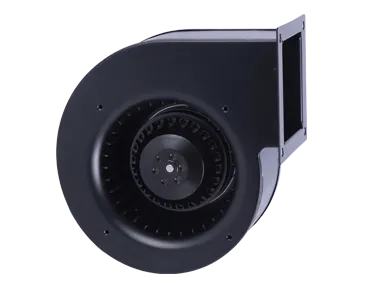
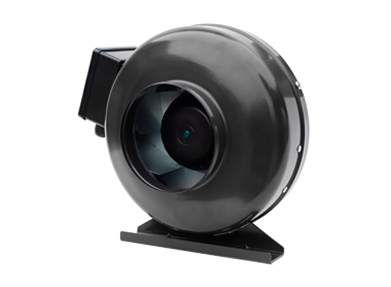
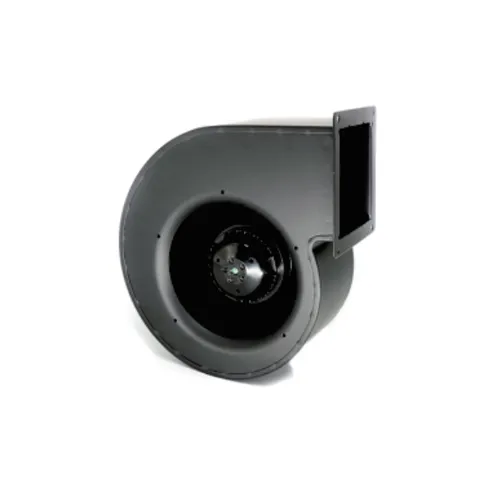
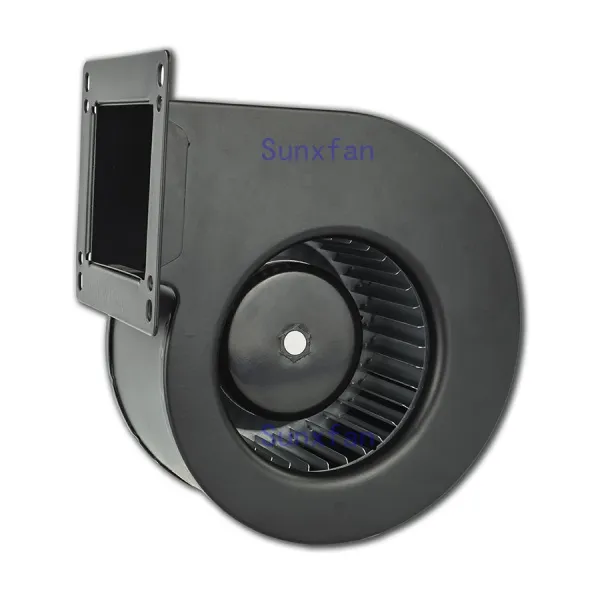
The working principle of the centrifugal fan is mainly based on the principle of converting kinetic energy into potential energy, accelerating the gas through the high-speed rotating impeller, and then slowing down and changing the flow direction, so that the kinetic energy is converted into potential energy (pressure). The following is a detailed explanation of the working principle of centrifugal fans:

Impeller rotation:
When the motor starts, it drives the impeller to start spinning at high speed.
Gas acceleration:
The gas enters the impeller axially and is accelerated between the blades as the impeller rotates.
Conversion of kinetic energy to potential energy:
The accelerated gas is thrown out of the center of the impeller and into the diffuser. In the diffuser, the flow direction of the gas changes, and the section area of the pipeline increases, resulting in the deceleration of the gas. This deceleration converts kinetic energy into pressure energy.
Continuous flow:
When the gas in the impeller is discharged, the center of the impeller forms a negative pressure, and the external gas is pressed into the impeller under the action of atmospheric pressure, forming a continuous air flow.
Impeller:
It is the most critical component in the centrifugal fan, and its rotation produces centrifugal force and accelerates the gas. The shape, size and number of blades of the impeller have a great influence on the performance of the fan.
Case:
Surrounds the impeller to provide a channel for gas flow. The shape of the housing is designed to facilitate gas deceleration and pressure energy conversion.
Diffuser:
Behind the impeller, by changing the direction of gas flow and the section area of the pipeline, the gas is slowed down and the kinetic energy is converted into pressure energy.
Air inlet and outlet:
The air inlet is usually located in the axial position of the fan for inhaling gas; The outlet is located in the radial position of the fan and is used to discharge the pressurized gas.
Motor:
Provides power to the impeller to make it rotate at high speed.
Pressure and flow relationship:
When the rotational speed is constant, the pressure-flow theoretical curve of the centrifugal fan should be a straight line. However, due to internal losses, the actual characteristic curve is curved.
Influence of inlet temperature and density:
The pressure generated by the centrifugal fan is greatly affected by the change of inlet air temperature or density. For a given intake volume, the highest intake temperature (the lowest air density) produces the lowest pressure.
Efficiency and regulation:
Adjusting the speed of the fan can eliminate the throttling loss and ensure that the fan always runs in the high efficiency zone, thus greatly saving power.
In summary, the working principle of the centrifugal fan is to generate centrifugal force through the high-speed rotation of the impeller, accelerate the gas, and convert the kinetic energy into pressure energy through the diffuser, so as to achieve continuous flow and pressure of the gas.
Quick Links
 中文
中文  English
 한국어
한국어 français
 Deutsch
 Español
 italiano
 русский
 português
 العربية
 Türkçe
 Polska