Call Me
Domestic:+86-18169817259
Oversea:+86-13790081902
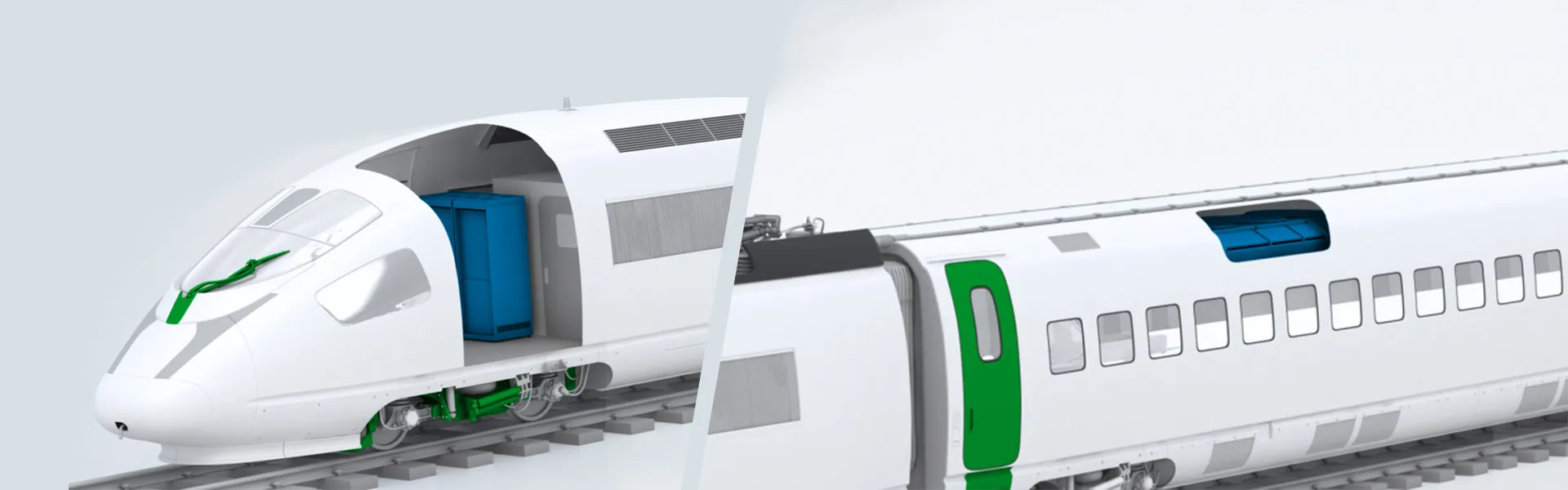
Truck cooling fans play an important role in controlling temperature across commercial vehicle systems, from engine and radiator cooling to cab HVAC, refrigeration and electronic thermal management. Different truck applications place very different demands on airflow, static pressure, installation space and operating conditions, which means fan selection should be based on the actual cooling system rather than fan size alone.
SunxFan provides axial and centrifugal fan solutions for commercial vehicle and transportation cooling applications. Axial fans are commonly suited to high-airflow applications such as radiator and condenser cooling, while centrifugal fans can provide the higher static pressure needed for HVAC ducts, evaporators and other restrictive airflow systems.
Whether you are developing a conventional commercial truck, refrigerated vehicle or electrically powered platform, the correct truck cooling fan should deliver the required airflow at the actual system resistance while meeting requirements for efficiency, noise, reliability and installation space.
A modern commercial truck may use several cooling and ventilation fans, each operating under different airflow conditions. Instead of selecting one general-purpose fan for the entire vehicle, engineers should match the fan design to the specific thermal management requirement.
The engine cooling system must remove heat generated during vehicle operation. A truck radiator cooling fan draws or pushes air through the radiator and surrounding heat exchangers, helping maintain the required coolant temperature when natural ram airflow is insufficient. This becomes particularly important during low-speed driving, idling, heavy-duty operation and working conditions where the engine produces significant heat but vehicle speed does not provide enough airflow through the radiator. Axial fan designs are frequently considered for radiator and condenser cooling because they can move large volumes of air through a relatively direct airflow path. For suitable high-volume airflow solutions, explore SunxFan's axial fans.
Truck drivers may spend long periods inside the cab, making reliable heating, ventilation and air-conditioning performance essential.
Unlike open radiator cooling, cab HVAC systems often require air to pass through evaporators, heaters, filters and ductwork before reaching the passenger compartment. Each component adds resistance to the airflow path.
For these applications, centrifugal blowers can be advantageous because they are designed to maintain airflow against higher static pressure.
Typical applications include:
Cab air-conditioning systems
Heater and evaporator airflow
Defrost and demisting systems
Ducted ventilation
Sleeper-cab climate control
SunxFan's centrifugal fans include configurations suitable for applications where compact installation and pressure capability are important.
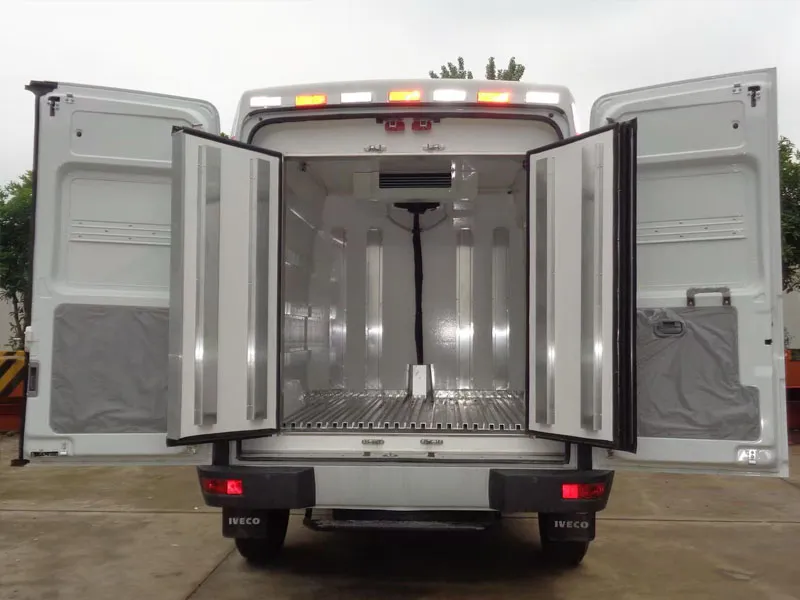
Refrigerated trucks depend on consistent airflow to distribute cooled air and control cargo temperature during transportation.
Fans may be used to move air across evaporator coils and circulate conditioned air throughout the refrigerated compartment. The required fan performance depends on factors such as heat exchanger resistance, cargo-space dimensions, airflow distribution and refrigeration system layout.
An incorrectly selected fan can result in uneven airflow, reduced heat-transfer performance or unnecessary energy consumption.
Depending on the system design, both axial and centrifugal fans may be suitable for a refrigerated truck cooling system. The final choice should be based on the required airflow and static pressure rather than fan type alone.
Electric and hybrid commercial vehicles introduce additional thermal management requirements.
Battery systems, converters, inverters, controllers and other power electronics can generate heat during operation. Controlled airflow may therefore be required to maintain components within an appropriate temperature range.
These systems often benefit from efficient variable-speed fan operation because cooling demand changes with vehicle load, ambient temperature and operating conditions.
EC axial fans can be considered where electronically controlled high-volume airflow is required as part of an engineered thermal management system.
There is no single fan design that is best for every truck cooling application. The most suitable solution depends on where the fan is installed, how much air must be moved and how much resistance exists in the airflow path.
| Truck Application | Typical Fan Choice | Main Selection Requirement |
| Engine & Radiator Cooling | Axial Fan | High-volume airflow |
| Condenser Cooling | Axial Fan | Airflow through heat exchanger |
| Cab HVAC | Centrifugal Fan | Static pressure through ducts and HVAC components |
| Refrigerated Cargo Cooling | Axial or Centrifugal | Heat exchanger resistance and air distribution |
| Battery Cooling | EC/DC Fan | Efficient controlled airflow |
| Power Electronics Cooling | EC/DC Fan | Targeted thermal management |
| Ducted Ventilation | Centrifugal Fan | Overcoming airflow resistance |
This table should be used as a starting point rather than an absolute selection rule.
A truck cooling fan should ultimately be chosen by comparing the required airflow and static pressure with the fan's performance curve at the intended operating point.
Axial and centrifugal fans serve different roles in commercial vehicle cooling systems.
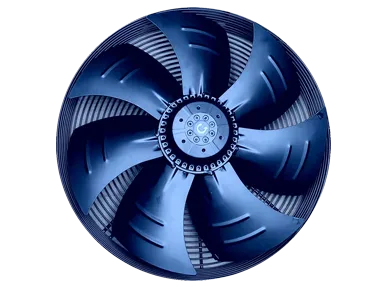
Axial fans move air approximately parallel to the fan shaft. They are particularly useful when large volumes of air must move through a relatively open airflow path. This makes them a natural option for many radiator, condenser and direct heat-exchanger cooling applications.
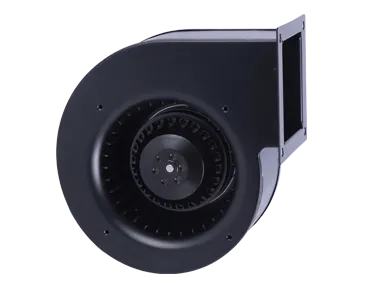
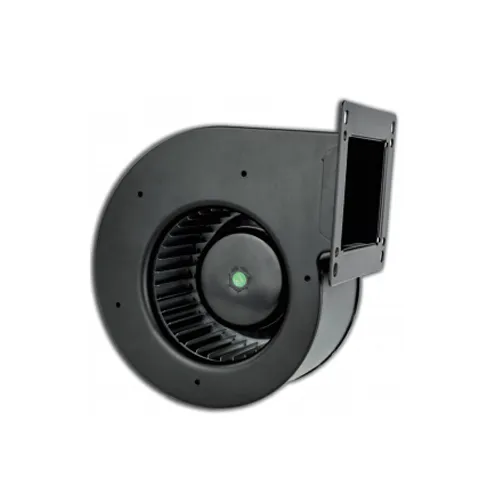
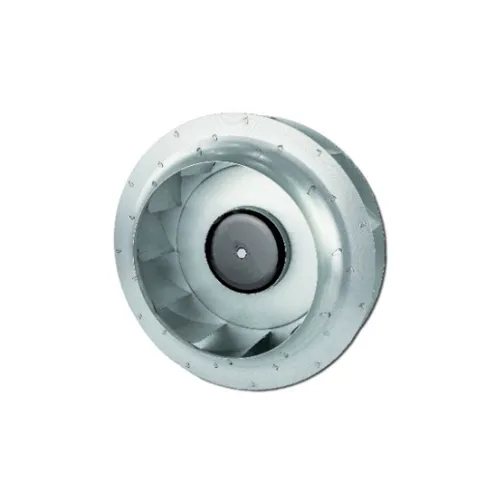
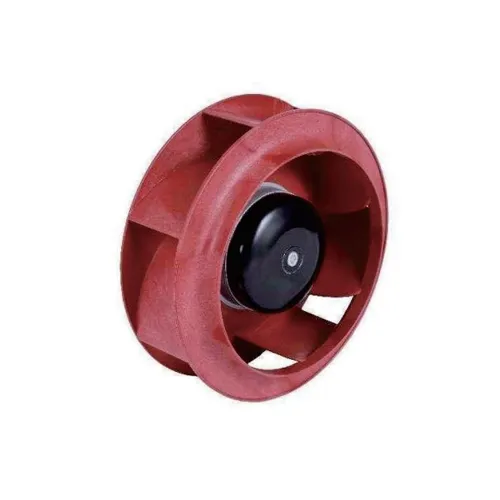
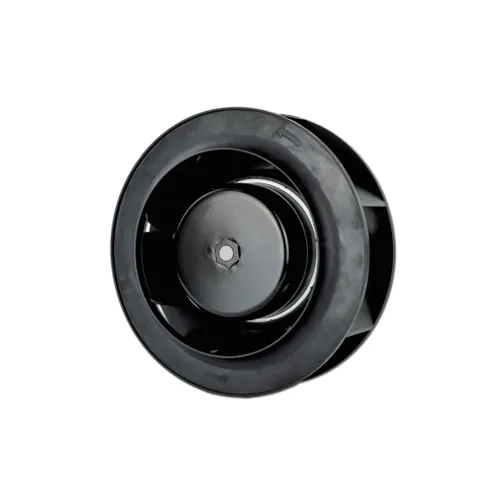
Centrifugal fans draw air into the impeller and redirect it toward the discharge. Their ability to generate greater static pressure makes them well suited to systems containing ducts, evaporators, filters and other components that restrict airflow.
For example:
High airflow + relatively low resistance
→ Axial fan is often the first option to evaluate.
Higher system resistance + ducted airflow
→ Centrifugal fan is often more suitable.
The choice should still be confirmed against the required operating point because airflow performance changes as system resistance increases.
For a more detailed engineering comparison, see our guide to the difference between axial and centrifugal fans.
Choosing a cooling fan for truck applications requires more than comparing diameter, motor power or maximum airflow. The fan must operate effectively after it is installed in the complete cooling system.
Start by calculating the airflow needed to remove the expected heat load.
Depending on the application, airflow may be expressed in CFM, m³/h or m³/s.
Radiator and condenser systems often require high-volume airflow, while HVAC and equipment-cooling systems may place greater emphasis on the relationship between airflow and pressure.
Every component in the airflow path creates resistance.
Common examples include:
Radiators
Condensers
Evaporators
Heat exchangers
Air filters
Ducts
Grilles
Louvers
Tight internal passages
As resistance increases, a fan must generate more pressure to maintain the required airflow.
This is why maximum free-air airflow alone should not be used to select a truck cooling fan.
Once the expected airflow resistance is known, determine the pressure required at the target airflow.
Axial fans generally perform well in high-airflow applications with relatively low system resistance.
Where the fan needs to move air through restrictive HVAC components or ductwork, a centrifugal design may be more appropriate.
Commercial vehicles have limited space for thermal management components.
Before selecting a fan, consider:
Fan diameter
Installation depth
Inlet clearance
Outlet clearance
Airflow direction
Surrounding equipment
Mounting configuration
Poor inlet or outlet conditions can also affect real-world airflow performance even when the fan itself is correctly sized.
Truck components may experience significantly different operating conditions from stationary HVAC equipment.
Fan selection should therefore consider environmental factors such as:
Ambient temperature
Dust and contamination
Moisture
Vibration
Shock
Continuous or intermittent operation
Vehicle duty cycle
The environmental requirements should be defined before selecting a model so that the fan and motor configuration can be matched to the application.
A larger or faster fan is not automatically the better cooling solution.
Operating a fan far from the required duty point can increase energy consumption and acoustic noise without delivering useful additional cooling.
Efficiency and sound performance should therefore be evaluated around the actual operating airflow and pressure.
Where the cooling demand varies, electronically controlled fan operation may help match airflow to system demand instead of operating continuously at maximum speed.
Truck cooling projects often require more than simply purchasing a standard fan.
The fan needs to work as part of the complete vehicle thermal management system.
SunxFan supports cooling and ventilation applications with a product portfolio that includes axial fans, centrifugal blowers and EC fan technologies. Fan selection can be evaluated according to:
Required airflow
Static pressure
Fan dimensions
Airflow direction
Motor technology
Control requirements
Noise targets
Installation restrictions
Operating environment
For OEM projects, this application-based approach helps avoid selecting a fan only from its maximum catalogue airflow and instead focuses on performance under the actual working conditions of the vehicle.

Quick Links
 中文
中文  English
 한국어
한국어 français
 Deutsch
 Español
 italiano
 русский
 português
 العربية
 Türkçe
 Polska