Call Me
Domestic:+86-18169817259
Oversea:+86-13790081902
As modern buildings demand higher indoor air quality and lower energy consumption, HRV (Heat Recovery Ventilation) and ERV (Energy Recovery Ventilation) systems have become essential in residential and commercial ventilation projects. At the core of these systems is the centrifugal fan, which directly affects airflow efficiency, energy usage, acoustic comfort, and long-term reliability.
Today, HVAC manufacturers and ventilation engineers mainly choose between DC centrifugal fans and EC centrifugal fans. While both technologies can support airflow circulation in HRV/ERV systems, their operating principles, efficiency levels, and lifecycle performance differ significantly.
For brands such as SunxFan, which specialize in advanced ventilation fan technologies, EC centrifugal fans are increasingly becoming the preferred solution for high-performance ventilation applications.
This article explains the key differences between DC and EC centrifugal fans and helps buyers determine which option is best for modern HRV/ERV systems.
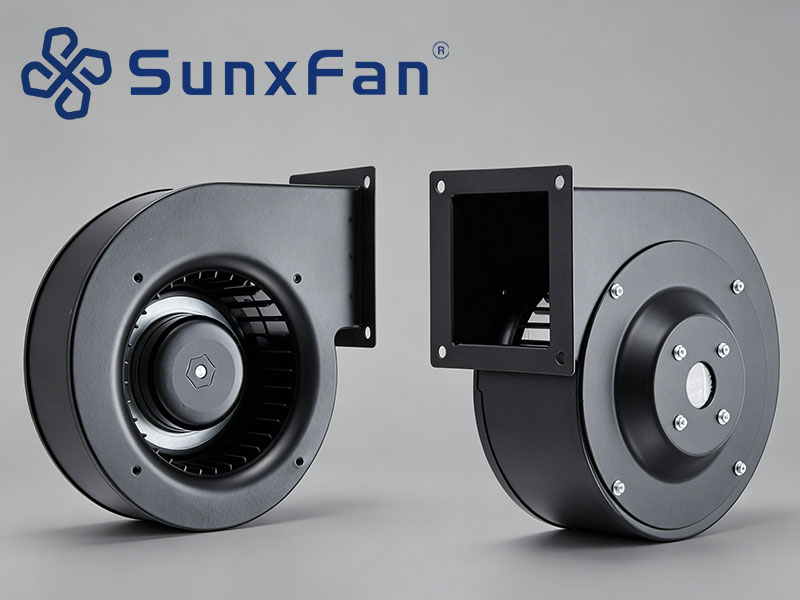
DC centrifugal fans use direct current motors for airflow generation, while EC centrifugal fans combine brushless DC motor technology with integrated electronic control for higher efficiency and intelligent speed regulation.
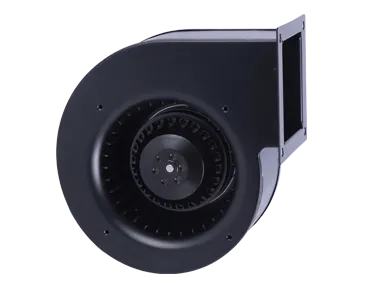
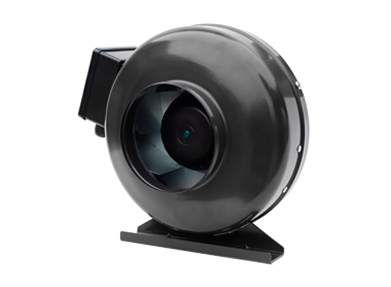
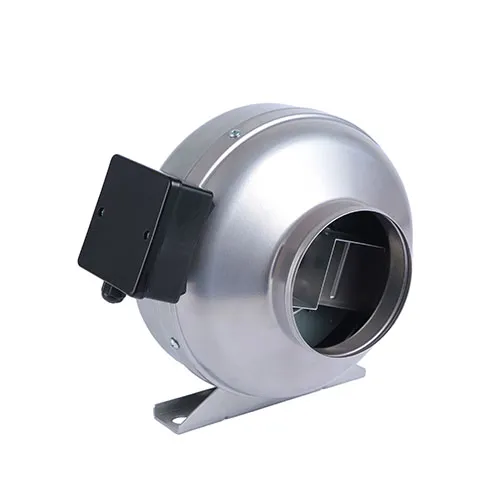
Centrifugal fans are designed to move air through duct systems using rotating impellers that generate static pressure. In HRV and ERV systems, they play a critical role in balancing fresh air intake and stale air exhaust.
Traditional DC centrifugal fans are often used in entry-level or cost-sensitive ventilation products because they provide simple operation and relatively low initial cost.
EC centrifugal fans, however, integrate advanced electronic commutation technology that improves overall motor efficiency and enables precise variable-speed control.
The biggest difference between DC and EC centrifugal fans is that EC fans deliver substantially higher energy efficiency and more precise airflow control.
In HRV/ERV systems that operate continuously throughout the day, even small efficiency improvements can generate significant energy savings over time. Most standard DC centrifugal fans operate with motor efficiency between 60% and 75%, while modern EC centrifugal fans commonly achieve efficiency levels above 85%. Because EC fans use brushless permanent magnet motors with integrated controllers, they minimize electrical losses and reduce heat generation during operation.
| Feature | DC Centrifugal Fan | EC Centrifugal Fan |
| Motor Efficiency | 60%–75% | 80%–92% |
| Speed Control | Basic | Intelligent Variable Speed |
| Power Consumption | Higher | Lower |
| Noise Level | Moderate | Lower |
| Heat Generation | Higher | Lower |
| Maintenance Frequency | Moderate | Low |
| Lifespan | 20,000–30,000 hrs | 40,000–70,000 hrs |
| Initial Cost | Lower | Higher |
| Long-Term Operating Cost | Higher | Lower |
For most modern HRV and ERV systems, EC centrifugal fans are generally the better long-term solution due to their superior efficiency, intelligent control, and lower operating costs.
Although DC centrifugal fans offer lower initial investment, EC centrifugal fans typically provide:
Lower electricity consumption
Better airflow management
Quieter operation
Longer operational lifespan
Reduced maintenance costs
For buildings operating ventilation systems continuously, the total cost of ownership often strongly favors EC technology over time.
EC centrifugal fans are especially recommended for:
Smart buildings
Passive houses
Commercial HVAC projects
Green-certified buildings
Premium residential ventilation systems
As energy efficiency standards continue evolving globally, EC centrifugal fan adoption will likely accelerate further across the HVAC industry.
Selecting between DC and EC centrifugal fans for HRV/ERV systems depends on project priorities, operating conditions, and long-term energy goals.
DC centrifugal fans may still fit some budget-oriented applications, but EC centrifugal fans clearly provide better overall performance for modern ventilation systems. Their higher efficiency, quieter operation, intelligent control capabilities, and longer lifespan make them the preferred choice for advanced residential and commercial HVAC applications.
As global demand for energy-efficient ventilation continues rising, manufacturers such as SunxFan are increasingly focusing on EC centrifugal fan technologies to support the next generation of smart and sustainable HRV/ERV systems.
The primary difference is that EC centrifugal fans use electronically commutated brushless motor technology for higher efficiency and variable-speed control.
Yes. EC centrifugal fans can reduce energy consumption by 20%–35% compared with many traditional DC fan systems.
EC fans generate less vibration and friction because they use brushless motor operation and smoother electronic commutation.
Yes. Many EC fan systems exceed 50,000 operational hours due to reduced mechanical wear.
Yes. DC centrifugal fans usually have lower initial purchase costs but may lead to higher long-term energy expenses.
EC centrifugal fans are better because they integrate easily with smart controls, sensors, and building automation systems.
Quick Links
 中文
中文  English
 한국어
한국어 français
 Deutsch
 Español
 italiano
 русский
 português
 العربية
 Türkçe
 Polska