Call Me
Domestic:+86-18169817259
Oversea:+86-13790081902
Modern buildings require high-performance ventilation systems that can maintain indoor air quality while reducing energy consumption. In Mechanical Ventilation with Heat Recovery (MVHR) systems, the centrifugal fan is one of the most critical components because it directly affects airflow stability, pressure performance, noise level, and overall system efficiency.
SunxFan also provides customizable EC centrifugal fan solutions for compact MVHR units, including PWM control, constant airflow control, and low-noise impeller optimization.
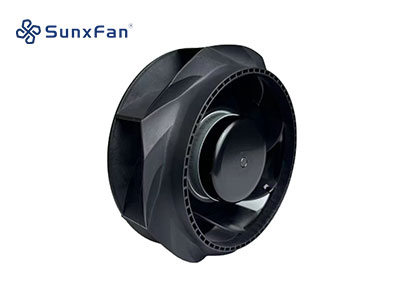
Noise level, energy efficiency, and operational lifespan are the three most important long-term performance indicators when selecting a centrifugal fan for MVHR applications.
Because MVHR systems often run continuously, even small differences in efficiency or acoustic performance can significantly affect operating costs and user comfort over several years.
Residential MVHR systems generally target:
Below 35 dB(A) for bedrooms
Below 40 dB(A) for living spaces
Below 50 dB(A) for commercial environments
Noise is influenced by:
Impeller blade design
Motor quality
Bearing type
Air turbulence
Housing structure
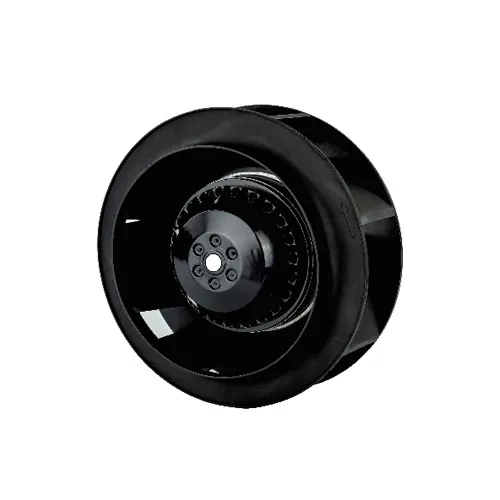
Backward-curved impellers are commonly preferred because they provide higher efficiency and lower turbulence noise.
An MVHR fan running continuously at 80W consumes approximately:
700 kWh annually
More than 7,000 kWh over 10 years
Even a 15% efficiency improvement can create significant electricity savings during the product lifecycle.
Key reliability indicators include:
| Component | Recommended Standard |
| Bearing System | Dual ball bearing |
| Motor Protection | IP44 or higher |
| Operating Temperature | -20℃ to 60℃ |
| Continuous Operation Rating | 24/7 duty cycle |
For OEM manufacturers, reliability is directly linked to warranty costs and brand reputation. Choosing fans with validated lifecycle testing and stable supply chains can reduce after-sales issues substantially.
A centrifugal fan supplier for MVHR units should provide not only airflow performance, but also engineering support, customization capability, stable production quality, and long-term technical reliability.
When evaluating suppliers, buyers should consider:
A professional supplier should assist with:
Fan curve selection
CFD airflow optimization
Noise reduction recommendations
PWM and intelligent control integration
Important indicators include:
ISO-certified production
Automated balancing systems
Motor reliability testing
RoHS and CE compliance
Modern MVHR manufacturers often require:
Compact fan structures
Custom voltage configurations
Smart control integration
Specific airflow-pressure combinations
For large-scale HVAC production projects, stable lead time and consistent quality are essential for avoiding project delays.
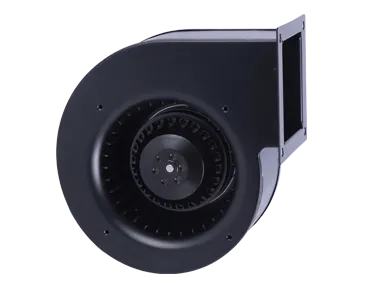
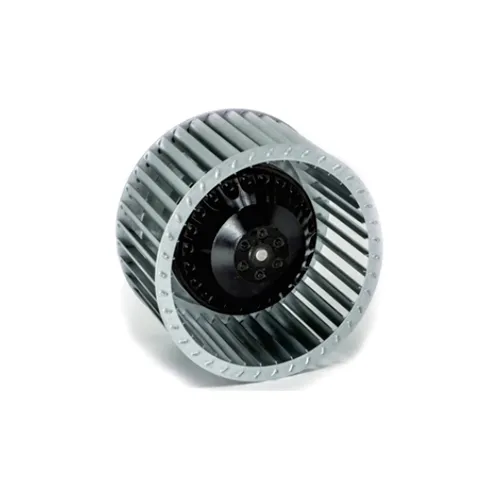
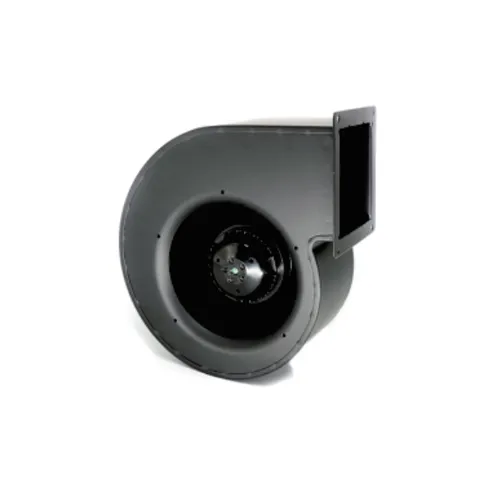
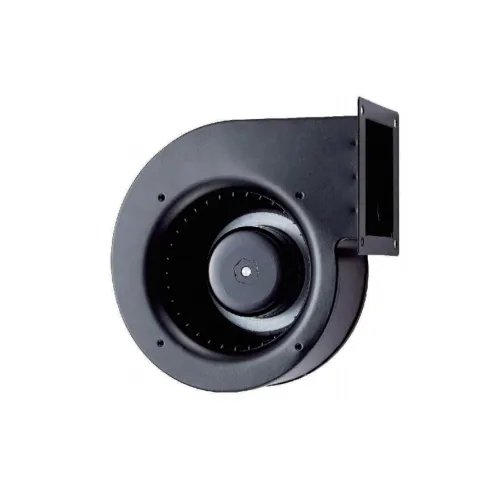
Brands such as SUNXFAN focus on customized EC forward-curved centrifugal fans and backwards-curved centrifugal fans for ventilation applications, helping OEM customers optimize performance, reduce energy consumption, and improve product competitiveness in residential and commercial HVAC markets.
Choosing the best centrifugal fan for MVHR units requires balancing airflow, static pressure, energy efficiency, noise performance, lifespan, and supplier reliability. While airflow ratings are important, real-world MVHR performance depends heavily on how efficiently the fan operates under system resistance conditions.
For modern residential and commercial ventilation systems, EC centrifugal fans are increasingly becoming the industry standard due to their lower energy consumption, intelligent speed control, and longer service life.
Manufacturers and HVAC system integrators should work closely with experienced suppliers that understand ventilation engineering, customization requirements, and long-term product reliability. Companies like SunxFan continue to support global OEM customers with advanced EC centrifugal fan solutions tailored for high-efficiency MVHR applications.
Centrifugal fans generate higher static pressure, making them more effective for overcoming duct resistance, filters, and heat exchangers in MVHR systems.
Yes. Although EC fans have a higher initial price, they typically reduce energy consumption by 20%–30% and offer longer operational lifespan.
Most residential MVHR units require airflow between 150–400 m³/h depending on building size and occupancy.
Quiet residential systems generally operate below 35–40 dB(A) for improved indoor comfort.
High-quality EC centrifugal fans can operate for 40,000–70,000 hours under proper conditions.
Backward-curved impellers are generally more energy efficient and quieter, while forward-curved impellers may offer compact size advantages in some applications.
Quick Links
 中文
中文  English
 한국어
한국어 français
 Deutsch
 Español
 italiano
 русский
 português
 العربية
 Türkçe
 Polska