Call Me
Domestic:+86-18169817259
Oversea:+86-13790081902
Question 1.
What are the limitations of dual inlet blowers?
Of course, while dual-inlet centrifugal blowers offer many advantages, they do come with a few trade-offs worth considering.
Greater installation space required: Due to their dual-inlet design and larger overall dimensions, these blowers typically demand more space onboard, which can be a constraint on vessels with limited machinery rooms.
Higher initial cost: The advanced structure and larger size often mean that dual-inlet centrifugal blowers come with a higher upfront price tag compared to their single-inlet counterparts.
Maintenance considerations: While their overall structure is simplified for routine maintenance, certain configurations and larger sizes can present more complex maintenance requirements, especially if both inlets need servicing simultaneously or access is restricted.
Understanding these limitations ensures designers and engineers make the most informed choices for their vessels' ventilation systems.
Question 2.
What is the static pressure capability of single inlet versus dual inlet blowers?
When comparing static pressure capabilities, single-inlet and dual-inlet centrifugal blowers reveal distinct advantages and limitations:
Single-inlet blowers generally perform well under moderate static pressure conditions. However, when faced with demanding ventilation setups—such as those involving extensive ductwork or heavily filtered systems—they might encounter reduced efficiency or difficulty maintaining airflow. This can be a challenge in shipboard environments where space constraints often require intricate duct arrangements.
Dual-inlet centrifugal blowers, on the other hand, are designed to better withstand higher resistance across complex systems. Their ability to maintain stable performance even when navigating filters, bends, or long duct runs makes them especially suitable for ships that require consistently strong ventilation despite ever-changing internal configurations.
In summary, for ships with filtration-heavy or intricate ventilation needs, the superior static pressure capability and stability of dual-inlet centrifugal blowers ensure reliable operation and efficient airflow.
Question 3.
What are the limitations of single inlet blowers?
While single inlet blowers have their place in certain applications, they present several distinct drawbacks in the context of shipbuilding:
Lower Airflow Capacity: Single inlet blowers typically handle less air volume compared to their dual-inlet counterparts, which can make them inadequate for ventilating larger ships or meeting demanding airflow requirements.
Uneven Air Distribution: In extensive or complex ductwork systems, single inlet designs may struggle to deliver uniform airflow, leading to inconsistent ventilation performance in different ship compartments.
Not Ideal for Large-scale Needs: For marine vessels that require robust air movement—such as those equipped with expansive HVAC systems or intricate air circulation setups—single inlet blowers often fall short of providing the necessary power and pressure stability.
Because of these reasons, single inlet blowers are less favored when efficiency, consistency, and scalability are critical factors in marine ventilation systems.
Question 4.
Are single inlet blowers more cost-effective than dual inlet blowers?
When considering cost-effectiveness, single inlet blowers do have the advantage of a lower initial purchase price and are often sufficient for smaller or less demanding ventilation tasks. However, for marine applications—where ventilation demands are high and efficiency is critical—the long-term benefits of dual-inlet centrifugal blowers often outweigh the upfront savings of single inlet models.
Dual-inlet designs deliver higher efficiency, reduced energy consumption, and longer service intervals, resulting in lower operating and maintenance costs over time. While the initial investment might be greater, their ability to handle large air volumes and maintain stable performance makes them the preferred choice for most shipboard environments where reliability and cost savings in the long run matter most.
Question 5.
What cost considerations should be evaluated when choosing between single inlet and dual inlet blowers?
When selecting between single-inlet and dual-inlet centrifugal blowers, it’s important to weigh upfront investment against long-term efficiency.
Single-inlet centrifugal blowers are known for their lower initial cost and reduced maintenance expenses. They’re most suitable for scenarios where the ventilation demand isn’t particularly high, and keeping costs down is a priority—think small vessels or auxiliary applications.
On the other hand, dual-inlet centrifugal blowers, with their advanced features and higher airflow capacity, come with a greater upfront price tag. However, their improved efficiency can lead to significant energy savings over time, making them a smart long-term choice for shipbuilding projects where operational efficiency and reliable performance are paramount.
To guide your decision, consider the following aspects:
Initial investment: Single-inlet models are more budget friendly for immediate needs.
Operating costs: Dual-inlet blowers, though costlier at the outset, often deliver a better return on investment through energy savings and consistent performance in demanding marine environments.
Maintenance: Simpler structures generally mean fewer maintenance demands, which can lower total costs over the vessel’s lifecycle.
Taking these factors into account will help balance performance requirements with budget realities, ensuring the blower selected aligns with both operational needs and long-term cost efficiency.
Question 6.
How does airflow distribution differ between single inlet and dual inlet blowers in HVAC systems?
When comparing single-inlet and dual-inlet centrifugal blowers, there are notable differences in how they distribute airflow within HVAC systems:
Single-inlet blowers typically draw air from one side, directing airflow in a focused, localized stream. This design is effective for targeted ventilation needs, such as isolating airflow to specific compartments or smaller cabins.
Dual-inlet blowers, on the other hand, draw air from both sides simultaneously. This allows them to supply a more balanced and evenly distributed airflow across broader duct networks—a clear advantage for large ships where consistent ventilation is vital throughout multiple sections.
By optimizing airflow patterns, dual-inlet blowers help maintain stable air quality and temperature, ensuring that even the most remote corners of a vessel receive adequate ventilation.
Question 7.
Are there blower options available with IP55 protection against dust and moisture?
When it comes to durability and dependability in challenging marine environments, many manufacturers offer both single-inlet and dual-inlet centrifugal blowers with IP55-rated protection. This rating ensures that the blower operates reliably even when exposed to dust and moisture—common conditions in ship machinery spaces and ventilation systems.
Thanks to the robust sealing and thoughtful engineering behind IP55 blowers from established brands like ebm-papst, Ziehl-Abegg, and Sunxfan, you can expect stable, long-term performance without worrying about environmental factors causing premature wear or malfunction. This added protection is yet another reason dual-inlet centrifugal blowers have gained popularity as the go-to choice for marine ventilation solutions.
Question 8.
What factors should be considered when selecting the right blower for an HVAC system?
When determining the most suitable blower for an HVAC system, several critical factors should be taken into account to ensure optimal performance, reliability, and cost-effectiveness:
System Size and Airflow Needs: Smaller systems with moderate airflow demands may be adequately served by single-inlet designs, whereas larger or more complex installations typically benefit from dual-inlet solutions. The volume and distribution of air required throughout the environment play a pivotal role in this decision.
Static Pressure and Ductwork Complexity: If the system is expected to overcome substantial resistance or is connected to intricate ductwork layouts, blowers with higher static pressure capabilities, such as dual-inlet centrifugal models, are often preferred. These can maintain performance where airflow resistance varies or is particularly high.
Noise and Vibration Levels: For environments where comfort and noise control are essential—such as passenger areas on ships or commercial buildings—quiet operation becomes paramount. Dual-inlet centrifugal blowers, known for their smoother airflow, generally result in less operational noise and reduced vibration.
Initial Cost and Long-Term Efficiency: Budget considerations are always relevant. While simpler blowers may offer lower upfront costs, dual-inlet centrifugal blowers often pay dividends in lower energy consumption, longer service life, and reduced maintenance needs.
Application Environment: The intended setting of the blower—whether compact electronic equipment, expansive ship interiors, or industrial applications—should dictate the final selection. Ensuring the blower matches the operational environment helps maintain efficiency and reliability over time.
By carefully weighing these key aspects, engineers can select the most appropriate blower type, ensuring that the system will perform optimally under the specific demands of its application.
Question 9.
In which situations should an engineer choose a single inlet blower versus a dual inlet blower for an HVAC system?
Selecting the appropriate blower type for an HVAC system hinges on several key factors, each influencing system performance and operational costs.
System Size and Airflow Needs: For smaller HVAC systems or setups where airflow demand is moderate, single-inlet blowers often suffice, offering a compact solution that is both efficient and cost-effective. Conversely, large-scale systems, such as those found in commercial buildings or ship engine rooms, benefit more from dual-inlet blowers, which deliver higher capacity and improved airflow stability.
Static Pressure Considerations: If the ventilation system involves extensive ductwork or faces high resistance, dual-inlet blowers are generally a better fit. Their design allows for greater efficiency in overcoming complex air routes, maintaining adequate pressure throughout the system.
Noise and Vibration: In spaces where noise control is paramount—such as passenger cabins or quiet working environments—dual-inlet centrifugal blowers operate more quietly and with less vibration, minimizing disturbances while maintaining strong air movement.
Budget and Long-Term Efficiency: While single-inlet blowers may have a lower upfront cost and are suitable for simpler applications, dual-inlet versions can lead to higher energy savings and reduced maintenance needs over the service life of the equipment, balancing the initial investment with long-term reliability.
Environment Specifics: Whether the requirement is for electronics cooling in control rooms or maintaining optimal temperatures in cold storage, matching the blower type to the application's unique demands ensures that the ventilation system performs efficiently and economically.
By carefully weighing these aspects, engineers can effectively decide between single-inlet and dual-inlet blowers to meet the varied and demanding requirements of modern HVAC installations.
Question 10.
What are the typical applications for single inlet blowers?
Single inlet blowers also enjoy widespread use, particularly where compact size and targeted airflow are required. Some of the most common application areas include:
Residential heating, ventilation, and air conditioning (HVAC) systems, where small-scale and efficient air movement is needed.
Household appliances such as air purifiers, vacuum cleaners, and electric heaters, leveraging the blower’s ability to deliver focused airflow in limited spaces.
Cooling systems for IT equipment and electronics—think computers, servers, and networking cabinets, where heat dissipation is crucial to prolong equipment life.
Medical devices and compact ventilation units in environments like hospital rooms or laboratory equipment, supporting precise and reliable airflow management.
By offering a straightforward solution for controlled airflow in smaller or specialized environments, single inlet blowers complement the broader range of shipboard ventilation needs handled by dual-inlet designs.
Question 11.
What are the advantages of using a single inlet blower?
Although double-inlet centrifugal blowers are favored for their efficiency and versatility, single-inlet blowers also offer unique benefits, especially in certain marine and industrial scenarios.
Compact installation: Thanks to their streamlined design, single-inlet blowers can fit easily into restricted spaces—ideal for smaller compartments or where installation space is limited.
Cost-effectiveness: With fewer structural components, these blowers generally have a lower upfront cost and simpler maintenance requirements.
Energy savings in targeted situations: For systems where airflow demand is moderate, single-inlet blowers can minimize energy consumption, making them well-suited for applications not requiring high air volume.
Easy integration: The straightforward structure simplifies installation and replacement, reducing maintenance complexity—an advantage for crews handling routine shipboard tasks.
For projects where space, cost, or specific ventilation needs are critical, single-inlet blowers can provide a practical and efficient solution.
Question 12.
What are the structural features of a single inlet blower?
Single inlet blowers, as the name implies, draw air through only one side of the impeller. This design leads to several distinctive features that set them apart from their dual-inlet counterparts:
Compact and Lightweight: Thanks to the one-sided air intake, these blowers are typically more compact and lighter, making them ideal for installations with restricted space.
Moderate Airflow Capacity: With just one inlet, the airflow rate is generally lower than that of dual-inlet designs, aligning them perfectly with applications that don’t demand high volumes of air.
Simplified Construction: Fewer components and a more straightforward design contribute to easier installation and potentially reduced manufacturing costs.
Targeted Efficiency: Single inlet blowers are best suited for moderate airflow requirements, where their streamlined structure excels without unnecessary bulk or complexity.
These structural characteristics make single inlet blowers a practical choice for certain shipboard environments where space and moderate performance are key considerations.
Question 13.
Can dual inlet blowers be used in residential HVAC systems?
While dual-inlet centrifugal blowers are highly valued in marine and large-scale industrial applications, their use in residential HVAC systems is relatively uncommon. The main reasons are size and practicality: these blowers are typically larger and more powerful than what is required to ventilate a home.
For most residential HVAC needs, single-inlet centrifugal blowers or axial fans from brands like Broan, Panasonic, or Lennox are more suitable, as they provide the necessary airflow with a smaller footprint, lower noise, and greater cost-effectiveness. However, in certain custom or high-demand residential scenarios—such as expansive multi-story homes or unique architectural designs—dual-inlet centrifugal blowers might be considered, though this is the exception rather than the rule.
In general, selecting the right blower for a residential HVAC system involves balancing efficiency, space requirements, and operating costs, making single-inlet models the preferred choice in most cases.
Question 14.
What is a single inlet blower and how does it work?
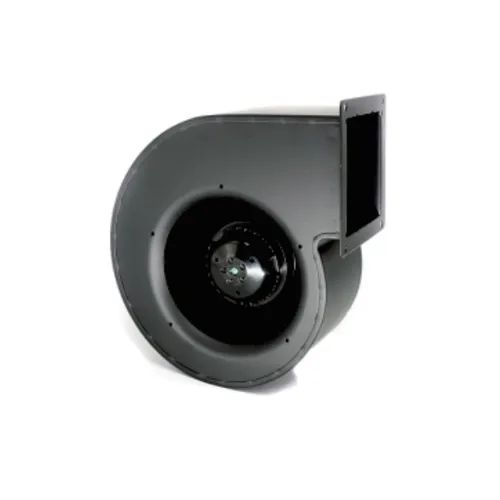
A single inlet blower is a type of centrifugal blower commonly used when space and weight are at a premium—think compact ship compartments or tight engine rooms. In this design, air enters from just one side of the impeller. Once inside, the impeller spins, accelerating the air outward through centrifugal force and directing it out at a 90-degree angle from the intake.
Key characteristics of single inlet blowers include:
One-sided air entry: Only one side of the impeller admits air, which means these blowers are naturally smaller and lighter, making them ideal for installations with tight space constraints.
Moderate airflow output: While they don’t move as much air as their dual-inlet counterparts, single inlet blowers are excellent for applications where moderate airflow is sufficient.
Efficiency in compact settings: Because of their design, they’re especially suited for localized ventilation tasks where efficiency and footprint matter more than sheer capacity.
Overall, single inlet blowers offer a practical and efficient solution when the goal is to provide reliable airflow without sacrificing valuable onboard real estate.
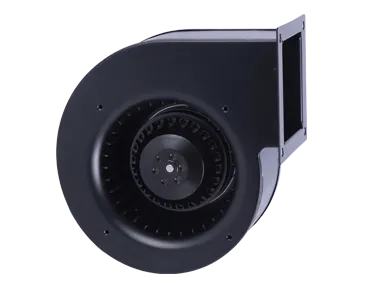
Two-way air intake, one-way air outlet: Dual-inlet centrifugal blowers have two air inlets, which can achieve two-way air intake and one-way air outlet, thereby improving the flow efficiency and pressure stability of the gas. This is undoubtedly a huge advantage for the complex and changeable ventilation needs inside the ship.
A key benefit of the dual-inlet design compared to single-inlet blowers is its ability to provide higher airflow and more balanced air distribution. By drawing in air from both sides, dual-inlet blowers handle larger volumes of air, making them particularly effective for applications where robust and uniform ventilation is critical—such as in the expansive, compartmentalized spaces of ships. This ensures that all areas receive consistent airflow, reducing the risk of hot spots or uneven temperature and contributing to a more stable onboard environment.
Dual-inlet centrifugal blowers have two air inlets, which can achieve two-way air intake and one-way air outlet, thereby improving the flow efficiency and pressure stability of the gas. This is undoubtedly a huge advantage for the complex and changeable ventilation needs inside the ship.
Structural Features and Performance
The design of a dual-inlet centrifugal blower enables air to enter from both sides of the impeller simultaneously. This not only increases the overall airflow capacity, but also ensures a more balanced air distribution throughout the ship’s ventilation system. Typically, these blowers are larger and may be heavier than single-inlet models, but the increased volume and efficiency make them ideal for high-demand marine environments.
By allowing higher airflow and more consistent pressure, dual-inlet centrifugal blowers effectively meet the rigorous requirements of shipboard ventilation—whether that means rapid air exchange in engine rooms or maintaining stable atmospheric conditions in living quarters.
High efficiency and energy saving: Dual-inlet centrifugal blowers adopt advanced pneumatic design, which can achieve efficient gas compression and transportation. Compared with traditional blowers, they have lower energy consumption, less noise and less vibration, providing ships with more stable and reliable ventilation services.
Energy efficiency comparison:
For marine applications, energy efficiency is a crucial consideration. While single-inlet blowers may be adequate for small-scale ventilation systems and tend to consume less power in such settings, they are less efficient when it comes to handling the high air volume demands of ships. Dual-inlet centrifugal blowers, on the other hand, excel in large-scale environments by maximizing air intake and optimizing airflow paths. This not only reduces overall operational costs but also enhances the long-term energy savings crucial for modern ship operations.
Two-way air intake, one-way air outlet: Dual-inlet centrifugal blowers have two air inlets, which can achieve two-way air intake and one-way air outlet, thereby improving the flow efficiency and pressure stability of the gas. This is undoubtedly a huge advantage for the complex and changeable ventilation needs inside the ship.
Comparison with Single Inlet Blowers
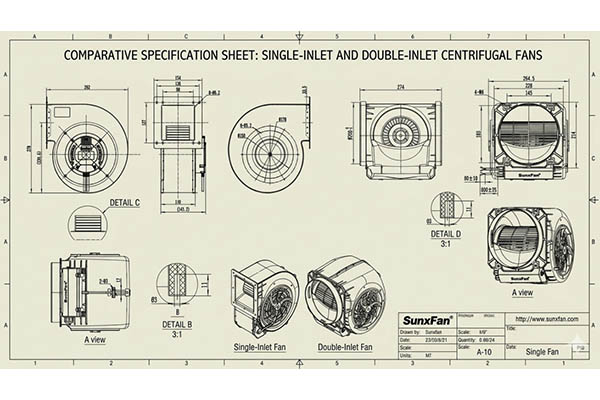
To better illustrate the strengths of dual-inlet centrifugal blowers, it's helpful to compare them with traditional single-inlet designs:
Feature Single Inlet Blower Dual Inlet Blower Air Intake One side of impeller Both sides of impeller Airflow Volume Moderate High Pressure Capability Moderate static pressureHandles higher static pressure efficiently Size and Installation Compact and lightweightLarger, requires more installation space Cost Lower initial investmentHigher initial investment Applications Small HVAC, appliances Marine, commercial HVAC, industrial systems By drawing air from both sides of the impeller, dual-inlet centrifugal blowers significantly increase airflow and maintain higher pressure stability, which is especially important for meeting the demanding ventilation standards on modern ships. While they may require more installation space and a higher upfront investment than single-inlet options, their superior performance in challenging environments—such as those found in marine engineering—justifies their selection as the preferred solution.
In the shipbuilding industry, blowers, as key equipment, play an irreplaceable role in the ventilation, air exchange, temperature control and other aspects of ships. With the continuous advancement of technology, dual-inlet centrifugal blowers have gradually become the first choice for marine blowers due to their high efficiency, energy saving and stability. This article will start from the advantages of dual-inlet centrifugal blowers, explore why they can become the preferred choice of marine blowers, and introduce the application of SunxFan technology in them.
Advantages of Dual-inlet Centrifugal Blowers
High efficiency and energy saving: Dual-inlet centrifugal blowers adopt advanced pneumatic design, which can achieve efficient gas compression and transportation. Compared with traditional blowers, they have lower energy consumption, less noise and less vibration, providing ships with more stable and reliable ventilation services.
Two-way air intake, one-way air outlet: Dual-inlet centrifugal blowers have two air inlets, which can achieve two-way air intake and one-way air outlet, thereby improving the flow efficiency and pressure stability of the gas. This is undoubtedly a huge advantage for the complex and changeable ventilation needs inside the ship.
Simple structure and convenient maintenance: The double-inlet centrifugal blower has a simple structural design and compact connections between components, making it more convenient to maintain and replace, reducing the operation and maintenance costs of ships.
Comparison: Single vs. Dual Inlet Blowers
To better understand the advantages of dual-inlet centrifugal blowers, it helps to compare them with single-inlet designs commonly found in other applications:
Feature Single Inlet Blower (SIB) Dual Inlet Blower (DIB) Air Intake One side of impeller Both sides of impeller Airflow Volume Moderate High Pressure Capability Suitable for moderate static pressureHandles higher static pressure efficiently Size and Installation Compact and lightweight Larger, requires more installation space Cost Lower cost Higher initial investment Applications Small HVAC units, appliances, electronics Commercial HVAC, industrial systems, cold chain, ships As indicated in the table, dual-inlet blowers are particularly suited for applications that demand high airflow and robust pressure capability—making them ideal for the challenging and variable environments found in ships.
Why it is the first choice
In the shipbuilding industry, blowers need to meet complex and changeable ventilation needs, while also considering factors such as energy consumption, noise, and vibration. Double-inlet centrifugal blowers have gradually become the first choice for marine blowers due to their advantages of high efficiency and energy saving, two-way air intake, and simple structure.
In addition, with the continuous advancement of ship technology, the requirements for blowers are getting higher and higher. Double-inlet centrifugal blowers can adapt well to these changes and meet the development needs of the shipbuilding industry.
In the shipbuilding industry, blowers, as key equipment, play an irreplaceable role in the ventilation, air exchange, temperature control and other aspects of ships.
Beyond marine applications, dual-inlet blowers are valued in a range of demanding environments where reliable, high-volume airflow is essential. For example, they are widely used in large-scale HVAC systems for commercial buildings, ensuring consistent climate control throughout expansive spaces. Cold storage facilities and cold chain logistics depend on these blowers to maintain stable temperatures and airflow, safeguarding perishable goods. In the industrial sector, dual-inlet centrifugal blowers support ventilation systems that require robust air movement to maintain safety and air quality standards.
Dual-inlet blowers also find application in air purification systems fitted with high-resistance filters, where their efficiency helps overcome pressure drops and maintain steady airflow. Additionally, data centers—where continuous, balanced cooling is critical to prevent overheating—rely on these blowers to support reliable operations.
By serving such a diverse array of industries, dual-inlet centrifugal blowers demonstrate not only their versatility but also their crucial role in meeting the demanding requirements of modern engineering and infrastructure.
Dual-inlet centrifugal blowers adopt advanced pneumatic design, which can achieve efficient gas compression and transportation. Compared with traditional blowers, they have lower energy consumption, less noise and less vibration, providing ships with more stable and reliable ventilation services.
Quiet Operation at High Airflow
Thanks to the dual-inlet configuration, these blowers are notably quieter during operation, especially at higher airflow. By allowing air to enter from both sides, the impeller load is balanced, which reduces noise levels and minimizes vibration. This design improvement not only enhances onboard comfort but also ensures a quieter working environment for crew members.
Compared with traditional blowers, they have lower energy consumption, less noise and less vibration, providing ships with more stable and reliable ventilation services.
Lower Noise and Smoother Operation:
Traditional single-inlet blowers often become noticeably noisier at higher speeds due to unbalanced airflow, which can lead to disruptive vibrations and less comfortable onboard environments. In contrast, dual-inlet centrifugal blowers offer balanced airflow on both sides, resulting in quieter operation even at high volumes. This not only enhances crew comfort but also minimizes acoustic disturbance throughout the vessel.
Quick Links
 中文
中文  English
 한국어
한국어 français
 Deutsch
 Español
 italiano
 русский
 português
 العربية
 Türkçe
 Polska