Call Me
Domestic:+86-18169817259
Oversea:+86-13790081902
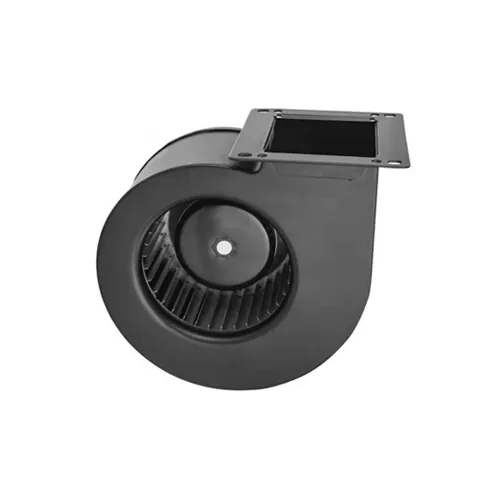
A centrifugal fan works by drawing air into the center of a rotating impeller and throwing it outward through centrifugal force. As the impeller rotates, air enters axially, accelerates through the blades, changes direction, and exits through the outlet with increased pressure and airflow.
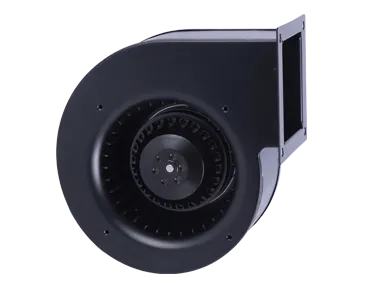
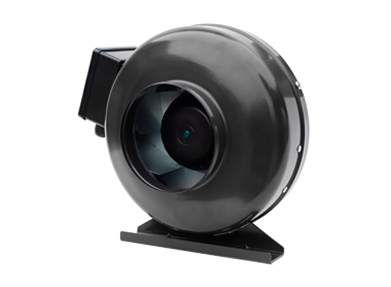
Compared with an axial fan, a centrifugal fan is better suited for systems with higher resistance, such as ducts, filters, heat exchangers, air handling units, range hoods, FFU systems and industrial ventilation equipment. SunxFan provides Centrifugal Fans for HVAC systems, industrial ventilation, equipment cooling, refrigeration and OEM applications.
A centrifugal fan is a mechanical air-moving device that uses a rotating impeller to increase air velocity and pressure. In this fan type, air usually enters near the center of the wheel and leaves radially or at about 90 degrees from the inlet direction.
Eurovent’s fan product definitions describe centrifugal fans as fans where air enters the impeller mainly in an axial direction and leaves perpendicular to that axis. This 90-degree airflow change is the main reason centrifugal fans are widely used where air must pass through resistance.
In practical applications, centrifugal fans are often used in HVAC equipment, ventilation systems, refrigeration units, air purifiers, kitchen exhaust, electronics cooling and industrial machinery. SunxFan’s centrifugal fan range includes forward-curved and backward-curved designs, with EC, DC and AC drive options for different airflow, pressure and control requirements.
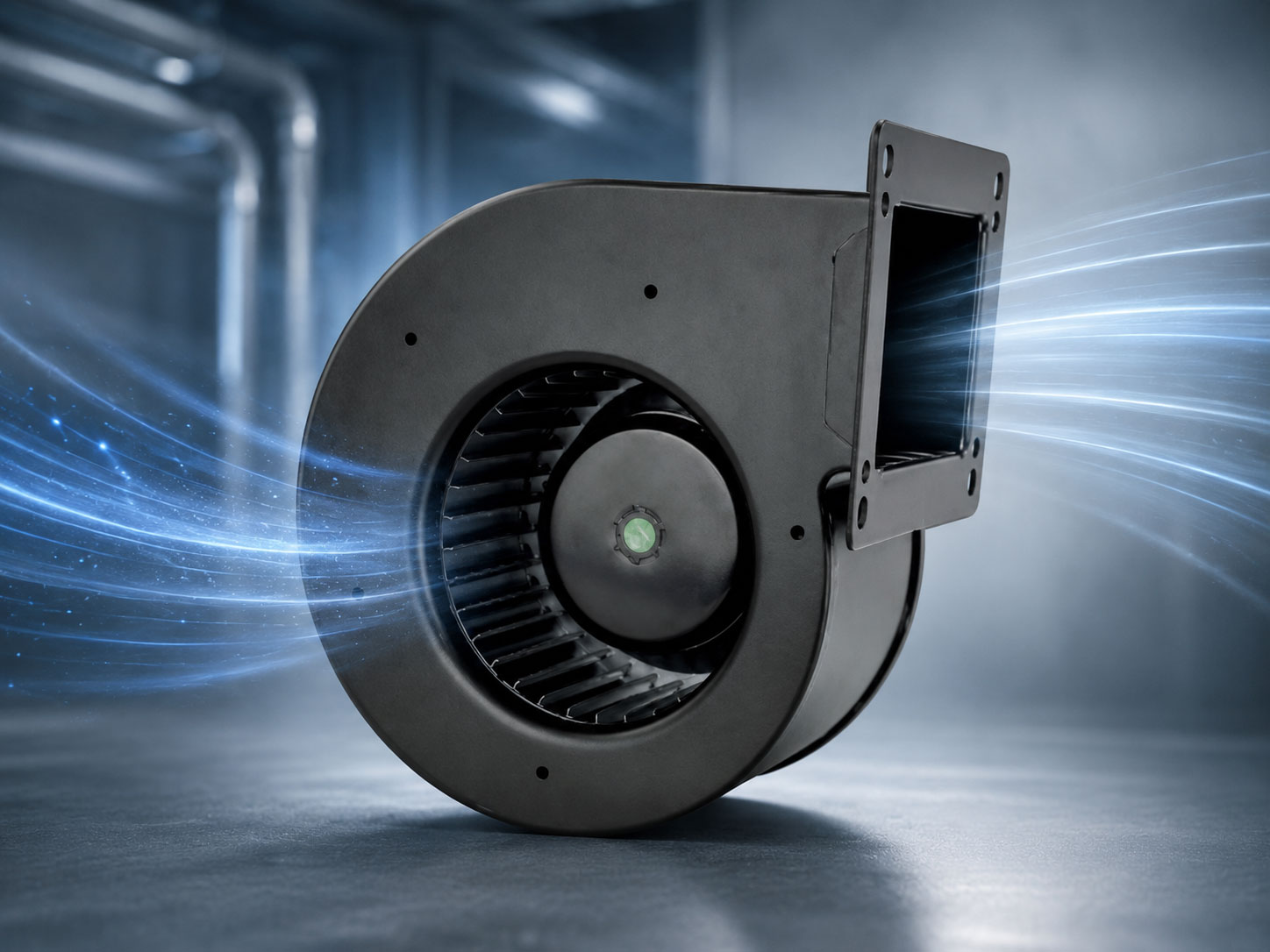
A centrifugal fan moves air by converting motor power into impeller rotation, then converting part of the air’s velocity energy into useful pressure. This pressure helps push or pull air through ducts, filters, coils or other system components.
The process starts when the motor turns the impeller. Air is drawn into the impeller eye because rotating blades create a lower-pressure region near the center. As air passes through the blades, it gains kinetic energy and is pushed outward toward the housing. The scroll or volute casing then guides the air toward the outlet and helps convert velocity into static pressure.
This working principle makes centrifugal fans stronger than axial fans in many ducted or filtered systems. A centrifugal fan may not always produce the highest free-air volume, but it can maintain airflow more effectively when the system has resistance. The U.S. DOE/NREL Improving Fan System Performance sourcebook explains that fan systems should be evaluated as complete systems because ducts, dampers, filters and fittings all affect pressure and energy use.
Centrifugal fan types are mainly classified by blade shape, inlet design and motor configuration. Different impeller designs create different airflow, pressure, noise and efficiency characteristics.
| Fan Type | How It Works | Typical Strength | Common Use |
|---|---|---|---|
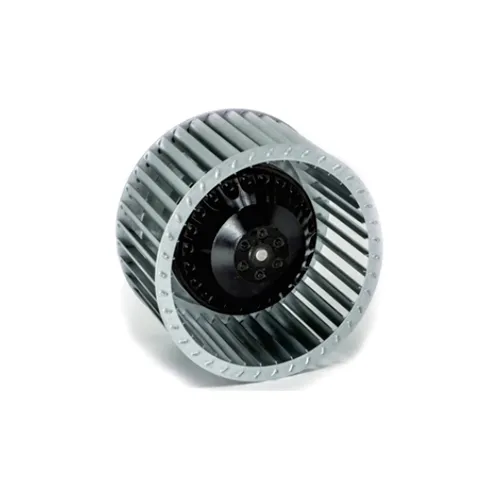
| Forward-Curved Centrifugal Fan | Many small blades curve in the direction of rotation | Compact size, good airflow, moderate pressure | HVAC, air handling units, range hoods, appliances |
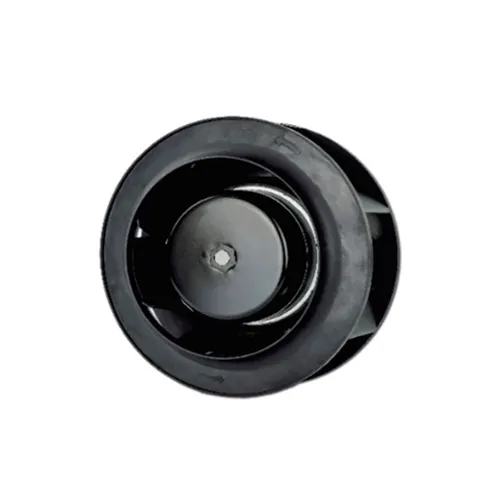
| Backward-Curved Centrifugal Fan | Blades curve opposite the direction of rotation | Higher efficiency, better pressure stability | EC fans, ventilation systems, clean-air equipment |
| Radial Blade Fan | Straight blades move air outward directly | Handles dust and particles better | Industrial exhaust and material handling |
| Single-Inlet Fan | Air enters from one side of the impeller | Compact equipment installation | Small HVAC units and enclosed systems |
| Double-Inlet Fan | Air enters from both sides | Higher airflow in limited space | AHUs, ventilation cabinets and large equipment |
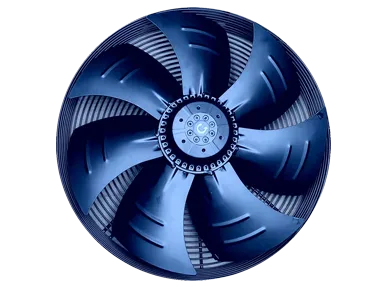
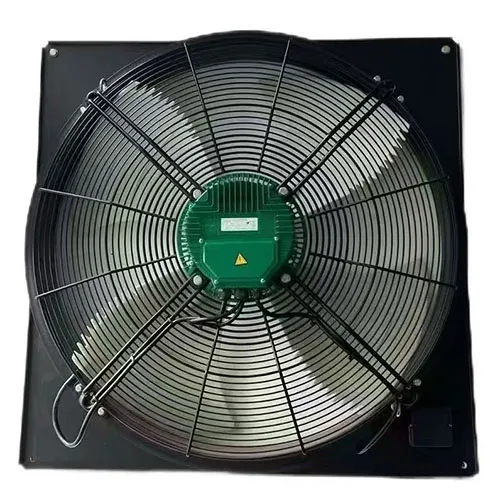
SunxFan’s Forward-Curved Centrifugal Fans are widely used in HVAC systems, air handling units and electronics cooling, and they are suitable for kitchen hoods and chimneys where moderate static pressure is needed. For projects where airflow direction is simple and resistance is low, buyers may also compare AC Axial Fans before selecting the final solution.
Fan performance depends on airflow, static pressure, rotational speed, impeller design and system resistance. In general fan-law thinking, airflow changes roughly with fan speed, pressure changes with speed squared, and power demand changes with speed cubed.
This means a small speed increase can create a much larger power increase. For example, increasing fan speed by 10% may increase airflow by about 10%, pressure by about 21%, and power demand by about 33%, under simplified similar-system conditions. This is why correct fan sizing and speed control are important for energy efficiency.
AMCA’s Fan Energy Index guidance explains that fan energy performance is linked to standardized fan test data and real operating points. For buyers, this means selecting a fan only by maximum airflow can be misleading. The better approach is to match the fan curve to the required airflow and static pressure.
SunxFan can support EC fan solutions with control options such as 0–10V, PWM, RS485 or Modbus depending on model configuration. This helps equipment manufacturers adjust airflow according to demand, reduce unnecessary power consumption and improve system control.
Choosing the right centrifugal fan means matching airflow volume, static pressure, installation space, motor type, noise target, operating environment and control method. A fan should be selected based on the complete system requirement, not only blade diameter or rated airflow.
For ducted HVAC systems, air handling units and filtration equipment, static pressure is usually a key factor. For compact equipment, housing size and outlet direction matter. For speed-controlled systems, EC motors may be preferred because they support precise airflow adjustment. For harsh or humid environments, protection level, motor reliability and material durability should be checked carefully.
Before requesting a quotation, buyers should prepare required airflow, static pressure, voltage, frequency, size limit, noise limit, working temperature, installation direction, control signal and application environment. SunxFan can help OEM buyers choose centrifugal fans for HVAC, refrigeration, electronics cooling, ventilation and customized equipment airflow systems.
A centrifugal fan works by drawing air into the impeller center, accelerating it outward through rotating blades and discharging it through a housing with increased pressure. Its 90-degree airflow path and pressure-building ability make it ideal for ducts, filters, heat exchangers, air handling units, range hoods and industrial ventilation systems.
For buyers, the right centrifugal fan depends on airflow, static pressure, blade design, motor type, noise requirement and control needs. SunxFan provides centrifugal fans, forward-curved centrifugal fans, axial fans and EC/DC/AC fan solutions to help equipment manufacturers and system integrators achieve reliable airflow performance.
A centrifugal fan draws air into the center of the impeller, accelerates it outward through rotating blades and discharges it through the outlet with increased pressure.
A centrifugal fan changes airflow direction because air enters axially and exits radially or at about 90 degrees after passing through the rotating impeller.
A centrifugal fan is better for ducts, filters and higher static pressure systems. An axial fan is often better for high airflow in low-resistance applications.
Static pressure is the pressure a fan must overcome to move air through ducts, filters, coils, dampers and other system resistance.
Centrifugal fans are used in HVAC systems, air handling units, range hoods, refrigeration equipment, air purifiers, FFU systems, electronics cooling and industrial ventilation.
SunxFan provides EC, DC and AC centrifugal fan solutions for HVAC, industrial ventilation, equipment cooling, refrigeration and OEM applications, with support for airflow, pressure and control customization.
Quick Links
 中文
中文  English
 한국어
한국어 français
 Deutsch
 Español
 italiano
 русский
 português
 العربية
 Türkçe
 Polska